By Reporters Without Borders
CHINA Weiterlesen »
By Reporters Without Borders
CHINA Weiterlesen »

Matthew J. Lee/Globe Staff
“I hoped the kids would read it and think about why this foreigner was writing this,” Henry DeGroot said.
Newton North High School senior Henry DeGroot was visiting a school outside Beijing on a semester abroad this year when he decided to have some fun and also make a point by writing prodemocracy messages in the notebook of a Chinese student.
Verschollene Filmschätze: 1989. Das Massaker auf dem Platz des Himmlischen Friedens (Ausschnitt)
Ausschnitt aus der Dokumentationsreihe „Verschollene Filmschätze“ von Serge Viallet.
Am Morgen des 5. Juni 1989 stellt sich ein Mann im weißen Hemd in Peking einer Panzerkolonne der chinesischen Armee entgegen. Er wird von westlichen Reportern dabei gefilmt, doch bis heute ist unklar, wer dieser Mann war. Weiterlesen »
Wegen der Entfernung und Sprache zieht Europa nur wenige Flüchtlinge aus der VR China an. Dennoch ist zu lesen, “Sieht man von Ausnahmen ab, ist bei den in Deutschland lebenden Chinesen davon auszugehen, dass ein großer Teil als Asylbewerber, der andere Teil als Arbeitsmigranten ins Land kam”. Weiterlesen »
Video 1. We can’t heard what they talking about, but while the police speaking, the workers keep shouting „No!“
Video 2. Protesting unpaid social insurance and illegal labor contracts, thousands of workers in Dongguan peacefully marched toward the city government. But riot police were waiting for them and proceeded to physically disband the march–ChinaLaborWatch
At least 50,000 workers at shoe-making factories owned by Yue Yuen Industrial in Dongguan took to the streets Monday 14 April 2014, protesting the company’s failure to pay its 70,000 employees their full social security and housing fund contributions.
Workers swamped the basketball courts inside the dormitory area holding banners that read: “Pay back the social security and public housing fund! Shame on Yue Yuen’s illegal activities!” — China Labour Bulletin
–About Tian An Men Square massacre in China Beijing, 1989. words and music by Phillip Morgan A song was heard in China in the city of Beijing. In the spring of 1989 you could hear the people sing. And it was the song of freedom that was ringing in the square, the world could feel the passion of the people gathered there. Oh children, blood is on the square. For many nights and many days, waiting in the square. „To build a better nation“ was the song that echoed there. „For we are China’s children, we love our native land, for brotherhood and freedom we are joining hand in hand.“ Oh children, blood is on the square. Then came the People’s army with trucks and tanks and guns. The government was frightened of their daughters and their sons. But in the square was courage and a vision true and fair, the Army of the People would not harm the young ones there. Oh children, blood is on the square. On June the 3rd in China, in the spring of ’89, an order came from high above and passed on down the line. The soldiers opened fire, young people bled and died, the blood of thousands on the square that lies can never hide. Oh children, blood is on the square. For four more days of fury the people faced the guns. How many thousands slaughtered when their grisly work was done? they quickly burned the bodies to hide their coward’s shame, but blood is thick upon their hands and darkness on their names. Oh children, blood is on the square. There are tears that flow in China for her children that are gone. There is fear and there is hiding, for the killing still goes on. And the iron hand of terror can buy silence for today, but the blood that lies upon the square cannot be washed away. Oh children, blood is on the square
Von Xu Pei
Seit dem Tiananmen-Massaker 1989 begleitet die „Weiße Rose“ die weltweite Widerstandsbewegung gegen die KP-Diktaturen. Zum ersten und zehnten Gedenktag des Tiananmen-Massakers fanden Konzerte unter „Weiße Rose“ in Stuttgart und Bonn statt. Denn die KP-Gegner weltweit fühlen sich von den Geschwistern Scholl und ihren Mitstreitern ermutigt. Zu Ostern 2014 kamen wir darin überein, dass im Geist der Weißen Rose die universellen Grundwerte gegen das KP-Regime verteidigt werden können und müssen. Weiterlesen »
By Rose Tang

I was speechless for a long time today, looking at a photo my Vietnamese Facebook friend Henry Pham shared with me: several bodies slumping on three small carts like sandbags, some of them had their hands tied at their backs. A dozen people standing a few yards away looking on. Henry wrote to me that it took him a long time to calm down and he almost threw up. Another Vietnamese friend, Vi K. Tran, first alerted me to the story with her translation of Vietnamese media coverage and Facebook postings on Saturday. She was angry and was eager to spread the truth. „I want to speak up,“ she wrote me. Weiterlesen »
By Rose Tang.
Today, April 15, marks the 25th anniversary of the beginning of the
Tiananmen Movement of 1989. On this day 25 years ago, Hu Yaobang,
former General Secretary of the Chinese Communist Party (he had been
demoted from that position in 1987) died of a heart attack. That afternoon,
Big Character posters started to appear on university campuses in Beijing,
mourning Hu’s death and voicing grievances with sentences like this: „The
one who shouldn’t die has died. Those who should die are still alive“. The
next day, memorial services were held on university campuses in several
other cities such as Shanghai. Merely two days later, on April 17, tens of
thousands of college students started to rally in Tiananmen Square — the
movement lasted until the bloodshed on June 4. So it’s not an exaggeration
to say Hu’s death sparked the whole movement.
Hu, to this day, has been considered by most Chinese people as the
cleanest and the most devoted Communist Party leader. He was known
for being liberal (he urged the Chinese to eat with knives and forks to
reduce the risk of contracting diseases) and for pushing for political
reforms. A tragic figure who died too soon, Hu was 73. More on his
life:http://en.wikipedia.org/wiki/Hu_Yaobanghttp://en.wikipedia.org/wiki/
Hu_Yaobang
Hu and former Chinese president Hu Jingtao were close colleagues and
friends in the 80’s. Hu Jingtao’s visit to the late Hu’s home in Jiangxi on
April 11 was seen by some as a signal of Beijing’s intention to reinstate
the Tiananmen Movement, but quickly the photos of Hu Jingtao’s visit
were deleted from the Chinese Internet, erasing the hopes for a change of
government’s directions.
Coincidentally, Chen Yizi, one of Hu Yaobang’s top advisors on the
economic reforms who headed a top think tank for Hu’s administration died
of cancer yesterday in his home in Los Angeles. Chen has been waiting
for 25 years in exile for a democratic China. He voiced his opposition
to the military crackdown of the student movement in 1989 and quit his
Communist Party membership on the day of the massacre. He escaped
China soon after and has been living in exile ever since. Beijing ignored his
plea to go back for medical treatment a few years ago. Chen is the latest
reformist to die in exile.
Many of them, such as astrophysicist Fang Lizhi who led the 1986 pro-
democracy movement and one of the most important mentors to student
leaders of the Tiananment Movement, and Liu Bingyan, a top investigative
journalist and reformer have passed away in exile. Former Tiananmen
student leader Wang Dan who lives in Taipei tweeted today about Chen
Yizi: „His family said he passed away very peacefully, without fear. His face
had a hint of smile. These years Old Chen lived with his family members as
a family. All the past events, endless sadness, impossible to speak about“
(„據家人轉告:’他去得很平靜,沒有恐懼,臉上隱隱掛著一絲笑.‘ 這些年與
老陳和他的家人相處得像家人一樣,種種往事,無限悲傷,無以言表.“)
While many prominent Chinese activists are mourning both Hu and Chen
and are remembering the good old days of the good party leaders, I’m
advocating a different approach. On social media such as Twitter and
WeChat in Chinese language, I’ve been calling on the Chinese to give up
their hopes for any internal changes within the Communist Party.
In other words, I’m urging people to overthrow the Chinese Communist
regime, in a non-violent way. We students of Tiananmen only wanted to
have a dialogue with the government but ended up being slaughtered.
There’s no point to negotiate with murderers. Hu Yaobang may have been
a nice human being, but he still belongs to a dictatorship and the world’s
biggest mafia organization that’s the Communist Party. In recent years,
while the Chinese government has been turning up the heat crushing
dissent and rounding up more people and inciting more violence, some of
the most prominent Chinese activists have been engaged in movements
such as the New Citizen’s Movement or the Constitutionalism Movement,
pushing for reforms within the existing system and hoping for the Party
leaders to change. Why would those Communist thugs listen? They have
been amassing more and more power and wealth, bullying the whole world,
and even calling the bluff at the Obama Administration and the EU.
We really should abandon the hopes for any CCP leaders to grant us
mercy and we should stop waiting for any Western governments to
pressure on Beijing. They won’t. Their appeasement is for their money
and vested interests, which is a chilling reminder of the pre-WW2 world. I
don’t think Beijing has the military might or even the guts to start WW3, but
if Western governments continue to kiss its ass, we’ll continue to suffer,
more and more, either from tainted foods or the pollution they spread to
the world, or, even worse, the toxic mentality and a complete oblivion to
humanity.
We should become our own saviors. I’m not the first one, nor am I the only
one advocating this. More and more Chinese, activists or ordinary citizens
are becoming impatient and are calling for a revolution. Wei Jingsheng, the
Father of Chinese Democracy who now lives in Washington D.C., has been
writing and posting about this approach. On New Year’s Day, Wei posted
a picture of a galloping horse with this message:“Reforms have died;
Revolution should be established.“ And he’s very open about his support
for independence for East Turkestan (Xinjiang) and Tibet. See his articles
here:
http://www.weijingsheng.org/report/report2014/report2014-03/
WeiJS140315XinjiangIssues1A809-W518.htm
http://www.weijingsheng.org/report/report2014/report2014-03/
WeiJS140316XinjiangIssues2A810-W519.htm
The fight is ours. Time to stop hoping for a good emperor to save us.
Time to stop waiting for the Chinese Communist Party leaders to have
a redemption.Time to pull back from lobbying Western governments or
organizations. Time to stop looking up to the sky. Time to look at the earth
— We should focus on grass roots movements. Those who should die will
die. Death, I write here, is not about human lives. Death to dictatorships
and tyrannies. Many of my friends inside China wrote on Twitter and
Facebook to me this message again and again: „The hours before the
dawn are the darkest, but the sun will shine on us very soon.“ So let’s
gallop together to a bright future in a free China, a free Tibet, a free East
Turkestan, a free Southern Mongolia, a free Hong Kong and and a truly
independent Taiwan…
Rose Tang is a writer and artist based in New York. She survived
Tiananmen Massacre in 1989 as a student protester.
Ich fand eine chinesische TV-Nachricht, die berichtete, dass ein Mann von der Universität Erlangen – „Deutschland, Erlangen – Nürnberg International University, Dekan des Geisteswissenschaftlichen Instituts“ – an dem Treffen mit dem KPCh Diktator Xi Jinping teilgenommen hatte.
I found a Chinese TV news, it says one man form the University Erlangen, „Deutschland Erlangen – Nürnberg International University Dekan der Geisteswissenschaften Institut“(international consortium for research in the humanities), presented the meeting with the CCP dictator Xi Jinping:
[Autor: Dr. Xu Pei]
Kooperation Ihrer Hochschule, „Konfuzius-Institut“
Sehr geehrter Herr Professor Radtke,
am 8. November des Jahres publizierte die Frankfurter Allgemeine Zeitung in ihrer Rubrik „Die Gegenwart“ unter der Überschrift „Eine harmonische Welt“ eine ganzseitige Analyse zu Organisation, Finanzierung und Ausrichtung der sog. Konfuzius-Institute. Ich erlaube mir, mich dem Verfasser Professor Dr. Rudolph anzuschließen.
Aus seiner detaillierten, auf chinesischen Quellen beruhenden und meiner Überprüfung nach präzisen und korrekten Untersuchung ergibt sich, daß die oberste Parteileitung der Kommunistischen Partei Chinas (Politbüro) die „Konfuzius-Institute“ führt und finanziert, daß in den Aufsichtsgremien die staatlichen (de facto: KPCh-) Einheitsfront- und Zensurabteilungen das Sagen haben und die Botschafter (alle KPCh-Zellenleiter) der VRCh eine regelmäßige Anleitungsfunktion gegenüber diesen „Instituten“ ausüben.
Weiterhin ist dort aufgezeigt, daß leitende Mitarbeiter auch hiesiger Konfuzius-Institute auf der letztjährigen Jahresversammlung in Peking u.a. den obersten Zensor der KPCh, die No. 5 der Parteihierarchie, den Verantwortlichen für „Ideologie“ und die zahlreichen Verschleppungen von freiheitlichen Geistern (auch aus dem universitären Bereich!) in der VRCh, Li Changchun, mit stehender Ovation begrüßten, als er sich ihnen auf der Bühne zeigte.
Aus meiner Sicht ist damit die Unabhängigkeit von China-bezogener Lehre und Forschung an Ihrer Hochschule nicht mehr bloß gefährdet, sondern wahrscheinlich sogar schon nicht mehr vorhanden – sowohl thematisch als auch personell.
Als eingebürgerte Exilchinesin der Bundesrepublik Deutschland, zumal als eine, die einst die Despotie der chinesischen KP-Funktionäre à la Li Changchun am eigenen Leib erfahren hat und gerade davor ins Exil nach Deutschland geflüchtet ist, halte ich es für selbstverständlich, daß Sie und der Senat Ihrer Hochschule sich nun, nach der Veröffentlichung in der F.A.Z., mit diesem Thema befassen und der deutschen Öffentlichkeit über die Haltung und Sicht Ihrer Universität Rechenschaft ablegen.
In der Gewißheit, daß Sie und der Senat das auch so sehen, verbleibe ich, auf Ihre Antwort wartend,
PS.:
Bei Bedarf könnte ich Ihnen die PDF-Datei per E-Mail zukommen lassen.
Ein inhaltlich gleiches Schreiben habe ich auch an die Präsidenten/Rektoren aller anderen Hochschulen in Deutschland geschickt, die „Konfuzius-Institut“-Kooperationen mit der Kommunistischen Partei Chinas pflegen.
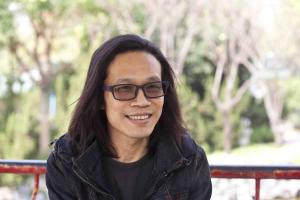 On 26 March 2014, the lawyer for detained human rights defender Mr Yang Kuang expressed serious concern for the health of his client, following a meeting with him on 25 March.
Yang Kuang, who is based in Hong Kong, has been in custody in mainland China since 31 December 2013, when he was detained on the charge of “illegally crossing state borders”.
Yang Kuang is a Hong Kong-based human rights defender who had been previously detained in mainland China after attempting to visit Liu Xia, the wife of imprisoned Nobel Peace Prize winner Mr Liu Xiaobo. Liu Xia has been under strict house arrest since her husband was awarded the Prize in 2010. Yang Kuang has also been involved in a campaign to assert Chinese sovereignty over a group of islands which are disputed with Japan.
Mr Sui Muqing, who is legally representing Yang Kuang, said that the human rights defender had told him that he had been suffering extremely severe headaches for a week and that he was relying on painkillers to get through the day. According to Sui Muqing, a doctor in Shenzhen No 1 Detention Centre where Yang Kuang is being held was unable to diagnose his symptoms and prescribed him painkillers to lessen the pain. He has not been permitted to receive treatment in an outside hospital.
Yang Kuang was detained on 31 December 2013 by authorities in Shenzhen, Guangdong province as he attempted to return to Hong Kong following a visit to his wife in Henan Province. Yang Kuang had entered the mainland illegally due to the fact that his home-return permit, a document which allows him to return to mainland China, was cancelled by Chinese authorities following his efforts to visit Liu Xia in Beijing in March 2013. At that time, he was held for 30 hours and questioned by Beijing police on charges of “provoking quarrels and making trouble”. He was detained again later that month after he entered the mainland illegally to pay a visit to his mother in Guangdong province. He was held for a number of hours before being released.
Front Line Defenders is seriously concerned for the physical and psychological integrity of Yang Kuang, especially in the context of human rights defender Ms Cao Shunli’s recent death in custody due to continued denial of access to adequate medical attention. While Front Line Defenders does not condone Yang Kuang’s illegal entry into mainland China, it believes that the cancellation of his home-return permit was unjustified, given that it related to his activities in defence of human rights.
Mather crying while dozen Chinese police beat her son.
In Guangdong province Maoming County, People protested the government establishs a toxic chemical, but thousands police beat them, killed 15, hurt more than 300 Weiterlesen »

(englishDeutschespañolFrançais中文)

Please sign for Recommend UN and EU to establish an independent commission of inquiry on the death of Chinese human rights defender Cao Shunli, This letter has been sent to UNHCR and EUCHR: To see the result: https://docs.google.com/spreadsheet/ccc?key=0AqHHFhEBGlVYdEVVSHRBZnVNVHAwZlY4cFM4aDBLeWc&usp=drive_web#gid=0
To whom it may concern: We are writing this letter to express our anger, dismay and sadness at the death of fellow human rights defender Ms Cao Shunli in hospital on 14 March 2014, following months of detention where she was not given access to adequate medical attention. Cao Shunli was disappeared and subsequently detained in September 2013 as she attempted to board a flight to Switzerland to participate in a UN human rights training programme. For years Cao Shunli had been lobbying for greater civil society participation in China’s drafting of its national human rights action plans and in its UPR reports. Despite the difficulties – the harassment, the arrests and the imprisonments – Cao Shunli continued to use the UN system to try to improve China’s human rights standards. After she was detained on 14 September 2013, reports quickly surfaced regarding Cao Shunli’s medical condition and the fact that she needed urgent medical attention. In response to a public statement (http://www.ohchr.org/EN/NewsEvents/Pages/DisplayNews.aspx?NewsID=13860&LangID=E) issued by a number of UN human rights experts on 16 October 2013 expressing concern about Cao Shunli’s condition, the Chinese government formally responded (http://www.ohchr.org/EN/NewsEvents/Pages/DisplayNews.aspx?NewsID=14394&LangID=E) saying that she had no serious health problems and enjoyed access to medical care. The Chinese government deliberately deceived the UN on this occasion while continuing to detain Cao Shunli, refuse requests by her lawyers for medical parole, and deny her access to adequate medical attention. The only reason she was punished in this way – murdered, in fact – is because she wished to work within the UN system. Astonishingly China is now a member of the Human Rights Council. There have been other cases in the past where human rights defenders, such as Li Wangyang and Li Hong, have died at a result of mistreatment at the hands of the authorities, and in these cases the Chinese government did not carry out an independent and impartial review to investigate the circumstances of their death. As such, we do not trust the Chinese government to reveal the real circumstances behind Cao Shunli’s death. We call on the UN and the EU to demand that the Communist Party of China agree to the establishment of an independent special commission of inquiry to investigate these circumstances, including the interviewing of all relevant health care workers who treated Cao Shunli and members of the security forces who presided over her detention. We further call on the UN and the EU continue to monitor the situations of other human rights defenders in China who are in prison because of their work, especially those in need of medical care.